Friday, September 30, 2011

Book Review Friday


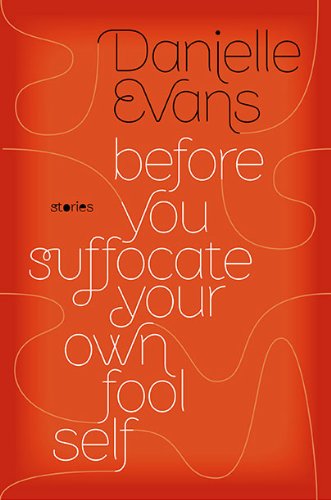
Before You Suffocate Your Own Fool Self

by Danielle Evans
Riverhead, 240 pp., 2010
Reviewed by Jessica Hindman

“Me and Jasmine and Michael were hanging out at Mr. Thompson’s pool” (1). So begins “Virgins,” the first story in Danielle Evans’s Before You Suffocate Your Own Fool Self, a brilliant debut collection that showcases Evan’s stunning ability to unearth racial and sexual complexities with deceptively casual language. In this first sentence, Evans creates a setting that could not seem more blasé: three teenagers “hanging out” by a pool. But under the surface of suburban normalcy, racial and sexual dangers lurk. As the story progresses, we find out that the seemingly simple act of lounging by Mr. Thompson’s pool is in fact a result of complex racial, sexual, and class hierarchies:

Mr. Thompson was retired, but he used to be our elementary school principal, which is how he was the only person in Mount Vernon we knew with a swimming pool in his backyard. We—and everybody else we knew—lived on the south side, where it was mostly apartment buildings, and if you had a house, you were lucky if your backyard was big enough for a plastic kiddie pool. (6)

In other words, Mr. Thompson is offering a favor to the lower-class narrator—Erica—and her friends. And despite their young age, Erica and Jasmine are already wary of male favors:

“We hung out with [Michael] because we figured it was easier to have a boy around than not to…When you were alone, men were always wanting something from you. We even wondered about Mr. Thompson sometimes, or at least we never went swimming at his house without Michael with us.” (6)

Evans is so subtle in establishing the dangers that surround her characters that the reader barely notices as she slowly raises the stakes. When the three teens decide to use their fake IDs to go clubbing in New York City, the danger seems more of the suburban variety (getting caught by their parents) than the late-night-news variety (rape or murder). But as the story progresses, the two types of dangers—the urban and the suburban—become increasingly conflated. At the end of “Virgins,” neither Erica nor Jasmine is still a virgin, but Erica has lost her virginity in a familiar suburban setting, while Jasmine has disappeared to have sex with strangers in the Bronx. The move from the suburban to urban and back, however, is ultimately inconsequential; neither of the girls has encountered sex in a safe, premeditated, or fulfilling way. Here Evans demonstrates the absurdity of presuming that the suburbs offer black teenagers a safer alternative to the city. The girls’ parents are working so many shifts (presumably to afford a suburban existence) that they fail to notice their daughters’ transgressions. And even though no one in the story says so directly, we know implicitly that the sexual stakes for white girls in this suburb are much lower than they are for Crystal and Jasmine.

Indeed, Evans’s writing is at its strongest when she shows how typical suburban high jinks swiftly become more ominous when the characters in question are minorities. The story, “Robert E. Lee Is Dead,” follows the relationship between Geena—a popular cheerleader who gets kicked off the squad for low grades—and her friend Crystal, who has managed to become valedictorian despite the school’s racial prejudice. When Geena asks Crystal to participate in a senior prank, Crystal points out that “White kids do senior pranks. When we try it, they’re called felonies” (220). Crystal ends up participating in the prank anyway, but when the prank gets out of hand and the two girls accidentally set the school football field on fire, Geena insists on taking the blame. The last image of the story is of Crystal running from the scene of the crime:

“I stared at Geena for a long second. Then I took off running, stopping in the middle of the parking lot to take off my heels. I kept running, the asphalt stinging my feet through my panty hose. Halfway up the hill behind the school, I stopped to look back, vaguely recalling Sunday school and Lot’s wife turning into a pillar of salt. Already I could hear sirens in the distance. I watched Geena sitting on the curb beside the pay phone, fists curled backward into cushions for her chin. She looked small and still and ready. I turned then, shut my eyes, and ran breathlessly toward the dam. I didn’t stop again until I had crossed the bridge and hopped the fence that took me back to Eastdale. On the other side, I stopped to catch my breath, and then kept running, knowing even then that a better person would have turned around.” (229)

At the core of this story, and the entire collection, is a moral question: How can blacks who have attained academic and worldly success live in a world where too many black teenagers literally get left behind on a curb? Evans prose here is stunning in its ability to show the pain of separation that occurs in the suburbs when upwardly mobile black youth leave their less fortunate friends to deal with the all-too-familiar consequences of racial inequality. Indeed, the title of the collection comes from a Donna Kate Rushin poem, which Evans includes as an epigraph to the book. In the poem, Rushin writes, “I’m sick of mediating with your worst self/On behalf of your better selves.” Evans’s stories are masterful portraits of characters who want to become their “better selves,” but who, for many reasons—racism, sexism, guilt about the others who are left behind while they enjoy newfound success—are never quite satisfied with their progress.

Monday, September 26, 2011

Flash Monday

A Sleeve Made of Hearts

by Zach VandeZande

Her job in those days kept her downtown pretty late, so I got to wandering around out of doors. It started out as sitting on the porch with a beer or two, looking the way a stray animal might, some possum or unwanted cat. The house, it was too big for me to be in it alone, I kept checking for intruders or ghosts, and anyway she was the one who wanted to move out here to the suburbs.

And eventually, yeah, I started walking around, and I started knocking on a few doors, got to asking questions and pretending like I was taking the census. A neighbor would open her door and I would say Excuse me, but do you think that love is just the selfish need to have your jokes laughed at, your bed shared, to have someone know as much as they can of you and still say Okay, yes, I want you to hold on tightly, and I will do the same? Answer on a scale of one to five. Five being strongly agree. So what if I’d had a drink or two? I’d still be professional, I’d still lean in all serious with my pen and my clipboard and wait patiently for them to consider the question. And I’d listen, really listen, to what they had to say.

In this way we got to know each other, the neighbors and me. But she found out about it and got mad, asked me to knock it off. I quoted Walt Whitman back at her—I’d been reading Walt Whitman on the porch sometimes. We secretly thought each other snobs. Different kinds of snobs, but still, it was a rough time.

Suburbs, they’ve got a breaking point to them, and it comes from within, it comes from the dull edge of shame in each resident. That’s the whole point of a homeowner’s association, to keep the chaos out, to keep that awful feeling of shame away. Also black people, probably, depending on the neighborhood. So what if they got involved? So what if I got citations in my mailbox? Quelling the human heart isn’t a noble thing was my thinking. So when she threw in with them, yeah, I took it kinda personal. So maybe my survey questions became a little hostile, maybe I threw up some whiskey on Miss Applebaum’s rose bush, maybe I lit a lawn or two on fire. The point is, and I’m marking it five on a scale of five, the point is I did it in defense of love.

Sunday, September 25, 2011

We Drank Until We Fell Over

Thanks to Simone Lounge for hosting the first ALR Graduate-Student Reading of the semester, and to Cool Beans for hosting the after-party. At least two of us have bruises and no memory of how they were received.


Poetry by Kara Dorris
Excerpt from My Highway of Sure Things


Yesterday, I found the lizards
behind my house doing it again.
“An offense to justice” honoring
a hydrangea bush I killed
last summer with a happy love.

On the back porch in hunter green
plastic containers, full of
Miracle Grow & shame,
sit open-mouth replacements.

Of course for the ground’s sake,
for the sad goldfish I buried underneath
in the toxic memory of bedazzle beads,
I wanted to wait a full year to announce
recovery, to absorb the French fry bits
& salt & blackberry fingers I used
to kill Fish.

But the lizards only have eyes
for each other & don’t believe in stories
with tragic heroes or closing actions.


Fiction by Laura Miller
Excerpt from "Perspective"

My appointment was on the first floor, room 109. The door wasn’t closed, so I stepped inside. It was a recycled space, used by traveling artists, private instructors, psychotherapists. Light from one undressed window freckled the podium and the whiskey bottle beside it. In the corner, a woman perched atop a yoga ball rattled the ice in her Styrofoam cup. She stood and extended a bony hand.

“I’m Dolly,” she said, wobbling a little in her heels. She grabbed my hand and pumped it hard before stepping behind the podium. “Let’s get started, shall we?” Dolly squinted through her rimless frames, tortoise-shell detail on the temple. “Usually we do this with two people,” she said. “But whatever gets your ghost.”

“No, actually,” I said and stepped closer to the podium so not to raise my voice. “I just have a few questions.”

Dolly slouched a little and reached toward me. She curled a lock of my hair around her manicured finger. “Aren’t you a sweet little thing,” she said and released the tress. “Go for it, honey pie.”

I pulled out a notebook from my coat pocket and tried not to notice as Dolly rolled her eyes. “For starters, your credentials…”

Dolly tapped the whiskey bottle with the tip of her purple heel. She puckered her lips as if slurping the answer from the air. Her fingers curled around the edge of the podium. “Pumpkin face, let me tell you about my credentials. My grandfather is an alcoholic. My brother shoots meth in his arm. My mother has been schizophrenic for 10 years. And my ex-husband works on Wall Street. I know a thing or two about dealing with assholes.”

“I see,” I said and knew immediately that it was the wrong thing to say. Dolly stepped out from behind the podium and teetered toward me like some prehistoric bird. She bent at her waist to meet me eye-level.

“Lover, what’s your name?”

“Bella,” I told her, reeling from the finger that moved toward my jaw line.

“Bella, I’m a busy woman. I run sixteen of these joints. Thirty-two people work under me, and I have twelve more appointments today. You want to tell me why you’re here?”

“Well, I came with my mother, but I just don’t understand what exactly it is that you do,” I said and plunged my hand in my coat pocket. My fingernails found the crystal and scratched at its surface.

Dolly stood upright and looked down at me. Her glasses slipped to the end of her nose. “I’ll tell you exactly what I do, sugar plum. I give perspective. People come to me because someone in their life has a twisted point of view. Sometimes people can’t see what’s right in front of them. You get me, Bella? It might be a close friend, a coworker, a boss. Most often, though, it’s a family member. How about that mother of yours. Could she use some perspective?”


Poetry by Nate Logan
Excerpt from "Booty Call Sonnet #32" (for Adam)

Where is the discussion of booty
in the Environmental Prose class?
We're out here pretending
to be graduate students in botany,
while booty flies in the lights
above Tucson. Orange blossoms
get busy in the boats of our nasal canals—
how can we care about plants
at a time like this? The weekend
before the assignment is due,
I'll write about the miles of cacti
and the dry heat. But tonight.
Tonight is not too hot for love.
Tonight is right for dry humping.

Thursday, September 22, 2011

An Interview with Landon Godfrey

Justin Bigos: Rereading your book, Second-Skin Rhinestone-Spangled Nude Soufflé Chiffon Gown, I’m struck again by your formal inventiveness. There are poems in monostiches, couplets, tercets, quatrains, etc; poems in prose; drop-lines and indented stanzas; and poems (the Eva Hesse series) that use columns, boxes, and white space for strong visual effect. How long does it take to recognize the emerging form of your poems?

Landon Godfrey: Minutes, years. I’m looking for ways to combine or layer or isolate verbal elements, and different forms can do that work different ways. Sometimes I start out with the idea of a form and a poem’s innards already mixed together. For a long time the grid structures for two of the Eva Hesse poems sat in a notebook, empty except for the grids themselves; then I filled them in. And I’m a ruthless reviser, so many poems start with formal ideas that change along the way--minutes, years.

JB: The title poem is written in seven stanzas of prose. Without line, you use anaphora and an increasingly elaborate syntax and wordplay to create a commanding voice. When did you know this was your title poem?

LG: It took me a long time. I found the process of ordering poems for a manuscript very difficult. The title poem became the title poem only at the very end of a five-year process, after I scrapped that manuscript and started over completely. I was dejected, and the poem’s strong voice sounded like a beginning, of both the manuscript and of a way to assemble it.

JB: You often use italics (or, say, a title like “Interview: Antique Iron Bed”) to emphasize words as dramatic speech. You are also an actor, and I’m curious if you feel drawn to the idea of persona, or at least the potentially performative qualities of poetry, even just on the page.

LG: I think you’re right about a link between the speech of acting and the speech of some of these poems. And the link certainly has to do with the pleasure (and sometimes pain) of being onstage and those same feelings one might incur saying a poem aloud. It’s scary doing so, but I love to. I love the sensation of having a body and being in the company of other bodies. I even like thinking about it!--which some of my poems work on. It can be sexy, but the feeling can also be similar to how we understand Keats’s negative capability. I crave the frisson of inhabiting someone else’s--or something else’s--feelings and sensations. His or her or its experience of touch or intellect, and emotions, moods, affections.

JB: Your diction is so wonderfully specific and sensuous, and many of your images truly sound unique, in a Joycean kind of way. Some of my favorites: “cementy New York,” “whiskeyish arias,” “tinfoil stars taped to a mirror.” Do you get as delicious a thrill writing this as I do reading it?

LG: Thank you. I do get a delicious thrill sometimes when writing; sometimes things come together in ways both mouthy and ethereal, and I love it when that happens. There’s a bunch of joy in Joycean stuff. (And I often hear Joyce in my head saying things like “pussy pussy plunder pussy.” That’s some joy right there.)

JB: That is some joy! Reminds me of the end of that Amy Hempel short-short, “Housewife,” about a woman who habitually sleeps with her husband and another man on the same day, and ends each day “incanting, ‘French film, French film.’” I’ve usually thought of Hempel, and Lydia Davis, too, as poets rather than storytellers. Are you interested much in the blurring of prose and poetry? Why is your poem “Le Rire”—certainly narrative on the surface—written as prose?

LG: “French film, French film.” I’m going to incant that all day today! I love the strange idea of exploitation in that story, that the housewife is “exploiting” the rest of the day with the act of incantation. We don’t know if she’s exploiting the men per se or if they’re exploiting her; but watch out, Day, you’re being exploited.

“Le Rire” (the title makes me laugh because it sounds like “Le Rear”) is a prose poem because I was reading Henri Bergson’s philosophical essay about the comic, which includes among other things some thoughts on the formal elements of the comic, and I wanted my poem to be a very small essay-ish something on the same subject, a bit of a response to the essay, in which Bergson asks, “Que signifie le rire?” He wonders how so many diverse comedy products generate some kind of essential funny. The essay starts in a lovely way, with his declaration that the small but impertinently defiant problem shies away from philosophical speculation. Something about that beginning, for me, transforms the problem from a thought into a clown, anthropomorphizing it. And then the problem escapes from Bergson’s essay and hides out in my poem for a while. It’s the “impertinent defiance” that really does it for me; it’s so human.

JB: One of the epigraphs to your book is by Walter Benjamin: “The eternal is more like lace trimmings on a dress than an idea.” This reminded me of a Mark Doty poem titled “Regarding Some Recent Criticism of His Work.” His poem ends, “—No such thing,/ the queen said/ as too many sequins.” Then I noticed Doty had blurbed your book. Is Doty a big influence on your work? Are there a couple others you’d like to mention?

LG: I studied with Mark at University of Houston, and I liked very much that he took sequins seriously. But one of the biggest influences Mark had on my work when I had just started writing poems was in his consideration of the poetic line. He answered an interview question about how he figured out some of the line lengths in his work by talking about the number of strong stresses per line, and I found that idea very helpful, the idea of organizing meaning against or with internal stresses. Informed by Marianne Moore in a way, but more opened up and out (Moore opened up and out…).

I’ll also claim Zbigniew Herbert. I love him. His sensibility, his intelligence, his exactingness. It’s good to have unachievable goals, and his whole world is that for me. I’m inspired by the seriousness of many Polish poets. And also the light touch of what sounds to my English&French-speaking ear like a heavy language (I know only a little Polish, enough to order a glass of milk or extra butter or kremowka papieska, which is a brilliant pastry both heavy and light simultaneously).

Ultimately there are too many poets to mention who’ve influenced my work. And artists, playwrights, singers, designers, farmers, physicists, bicycle-riding dogs…

JB: Were you able to visit Poland while at Houston? What was it like? Did you order the bigos?

LG: Yes, during two summers I went to Kraków with Adam Zagajewski, Ed Hirsch, and students in the Creative Writing program. Fabulous. Kraków is wonderful--old and so Polish!--with beautiful spaces. And very lonely, sad spaces, too. I was thrilled to be there, because that’s where many great Polish poets are/were.

Alas, I did not order the bigos. You, sir, are the only Bigos.

JB: One of my favorite poems in the book is “Self-Portrait as Lucian Freud’s Girl with a White Dog.” What do you make of the oddly umbilical sash in that painting? Also, how much money would it take to commission you to write a poem inspired by one of the Leigh Bowery portraits?

LG: Wait, one can make money as a poet?

Justin, what do you make of the oddly umbilical sash in that painting?

JB: I don’t know, but the eye goes right to it after the face, the breast, and the dog face. But the whole time I’m aware it’s there. It doesn’t need to symbolize anything, but it is menacing. Sort of noose-like in its limpness. Kind of gross, really.

LG: I think some of its import in the painting is the geometrical sectioning it does. A number of grid-like structures exist in the painting, depending on which lines one perceives as dominant. So it amuses me that this organic, somewhat disgusting, perhaps even enticing shape/line dangles an inexact map for entering the painting, even as it suggests an exiting of the body and a pairing of two bodies. Like a terrifying version of the “you are here” map at a mall. The sash also takes the place of one of the dog’s signature features, the tail, which is occluded in the painting. The dog’s still a dog, of course, but tailless and sexless, whereas the woman has both sex and tail. But what all this means, I’ve no idea. It’s all very visceral, and I like that.

JB: Your poems make me want to eat a melting candy apple, give my wife a gin-and-tonic kiss, and run in sparkling drag through the Louvre. Am I your ideal reader?

LG: Oh honey, yes you are.

JB: A million thanks, Landon.

LG: A million thanks to you, Justin. French film, French film….

Landon Godfrey was born and raised in Washington, DC, and now lives in Black Mountain, NC. Her poems have appeared in journals and anthologies, including The Southeast Review, Lyric, Chelsea, POOL, and Best New Poets 2008. Landon was recently awarded a North Carolina Arts Council 2011-2012 Artist Fellowship. Her work has been featured as a collaborative project at Broadsided and nominated for a Pushcart Prize. Second-Skin Rhinestone-Spangled Nude Soufflé Chiffon Gown was published in February 2011. In selecting Landon’s book for the Cider Press Review Book Award, David St. John writes, “Never has the sumptuous materiality of language felt more seductive than in Landon Godfrey’s remarkable debut collection, Second-Skin Rhinestone-Spangled Nude Soufflé Chiffon Gown. These exquisite poems are both sensually compelling and intellectually rigorous—a rare feat indeed. The iridescence of this marvelous volume continues to glow long after one has turned out the lights.”

More information about Landon is at www.landongodfrey.com.

Monday, September 19, 2011

Perfect: Enemy Of The Good

I wanted to pass along Dwight Garner's recent article from the New York Times, which praises novelists who produce a solid book every few years (e.g., Roth, Bellow) and questions those who labor for a decade in an attempt to produce a masterpiece (e.g., Franzen, Eugenides). Of course, Philip Roth serves as a poor example in this case since his novels are both masterful and frequent. Nonetheless, Garner makes a point all writers should remain mindful of: whether you are are putting together a novel or polishing a story you intend to submit to ALR (whose regular submission period opens in two weeks), perfect fiction does not exist. Raymond Carver always received extensive revisions from his editor, Gordon Lish; Balzac rewrote every one of his novels through round after round of proofs; Proust's In Search of Lost Time (a favorite of both myself and Jennifer Egan) is filled with errors and internal contradictions. In other words, your writing doesn't need to be perfect in order to find a publisher, only good. So quit worrying about whether the sky in your story should be "azure" or "cerulean" and start sending your work out, preferably to us.

Flash Monday

New poetry for today's Flash Monday. Send your submissions to seagremlin@gmail.com -- 800 words or less -- open to all!

Calavera

by Kym Wilson

He waits in a field of marigolds, lush and complicated
Straightening his jacket, smoothing his hair
Thinking of the time he whipped the boy for not looking after his sisters.
Coffee cup in hand, it's been so long since it was filled
By the warmth of drink and kin.
Walking amongst the candles, flickering in the fragrance
Of bread and sugar and blood and earth,
A feast of the living and the dead, together at the table he built
From the roots of a felled family tree.
Hushed words of distant households, quiet hands working to clear ground
Songs sung in voices older than mountains and deeper than wells,
All falling down around him like the ash of his ancestor's bones,
Put his mind at ease, put his name on stone
Wife and only son coming home.

Monday, September 12, 2011

Monday in a Flash

It's Monday. You have things to do, people to please. Take ten minutes to breathe, relax, and write, goddammit. Today, we are your outlet for fiction, non-fiction, prose poetry... whatever your heart ejaculates in 800 words or less. Submissions are open to all you word wizards out there-- send it my way (seagremlin@gmail.com). Payment is your name in print on the interwebs and a million-trillion gratitudes from God and Buddah and Ganesha and probably some people, too. Start typing!

Without further adieu...

Resignation

by Walker Smart 

First and foremost, we’ve decided that we can’t work with you anymore. We thank you for the opportunity you’ve given each of us, but at this time the things that are bad outweigh the things that are right. We feel we’ve been straightforward with you, more or less, about things we think need to be better, and we feel we’ve given you ample time to fix these things, or to outline a strategy of how you plan to improve these things, or at least try to come up with compromises. At this time we feel any attempt made to communicate quickly degrades into a situation where you feel that we are insulting you and your work, when in actuality we all have great respect for the work you’ve done. We talk about it all the time, and lament that you’ve been unable to use your years of experience to repair these grievances we have. We’ve talked in great length, towards the end of many late nights, about all the ways we feel we are misrepresenting ourselves to our clients and regret that we can’t share our many revelations because you would take them as nothing more than base cruelty, and we have no intention of dishing it out when the end result would do nothing more than offend you. We’ve found you to be fragile. We have no ill will towards you as a person, and hope the best for you. We realize this will place you in a difficult situation, you’ve made promises to many people and you can’t fulfill any without us, so as to what you can do next, we have no additional advice for you from this point on.

As for the matter of our contracts, since the current work situation is not what we had in mind and not at all what we had discussed at the time of signing, we feel that they are null and in any case were nothing more than a formality to begin with. We have grown since then, since the time of the signing, and any actions made were from a place of naivety, and we can’t be faulted for our lack of understanding nor should we continue to be punished for it.

In all honesty, as much as we feel we’ve prepared you for this inevitability, things like this must always come as a shock, but please know the sadness we feel is as great, if not more so, than what you must be feeling. The time for talking is over, and we feel it is only through action that the things we need will come to us. Something is broken here, and it hasn’t been fixed, so we have no choice but to go our separate ways, and hope for each of us that when the next, best opportunity comes along, we can all look back on this fondly, as a stepping stone towards our ultimate prosperity in separate ventures. There are wounds that will have to heal first, but eventually we hope we can move past this and be better friends for it in the end.


Tuesday, September 6, 2011

Read, Write, Speak: ALR Call for Volunteers!

This fall, the American Literary Review is looking for volunteers of all stripes. Read on for ways that you can participate in the life of our journal. If you’d like to sign up to be a volunteer, please email Managing Editor Hillary Stringer  (stringerhas@yahoo.com).

Read:

We are looking for people to sign up to be volunteer readers. Readers will read around 40-45 submissions from the sluice pile (or about three a week) over the course of the semester. At the beginning of the school year, we will train you on how to read and rank these submissions (meetings TBA in the next few weeks). If you’ve worked for a journal before, your input is welcome at these training sessions. More information about the ranking system set-up is below. If you are an official volunteer reader your name will appear as such in the journal.